Understanding the difference between hand knotted vs hand tufted rugs is the most important decision a wholesale buyer makes – and the most commonly misunderstood one.
TL;DR
A hand-knotted rug is built knot by knot on a loom with no adhesive – lifespan of 25-100 years, retains resale value, and is repairable. A hand-tufted rug uses a mechanical tufting gun and latex adhesive backing – lifespan of 10–15 years, no resale value, not repairable once the latex degrades. At NP Rugs wholesale pricing, the difference is roughly $800–$1,000 (tufted, 8×10 ft) vs. $1,600–$2,000 (knotted, same size). The 2x premium buys you 3x the lifespan, ethical certification (GoodWeave + Label STEP), and a product your retail clients never need to replace on your watch. Nepal benefits from US GSP tariff exemptions, making it a direct cost advantage over China- and India-sourced alternatives.
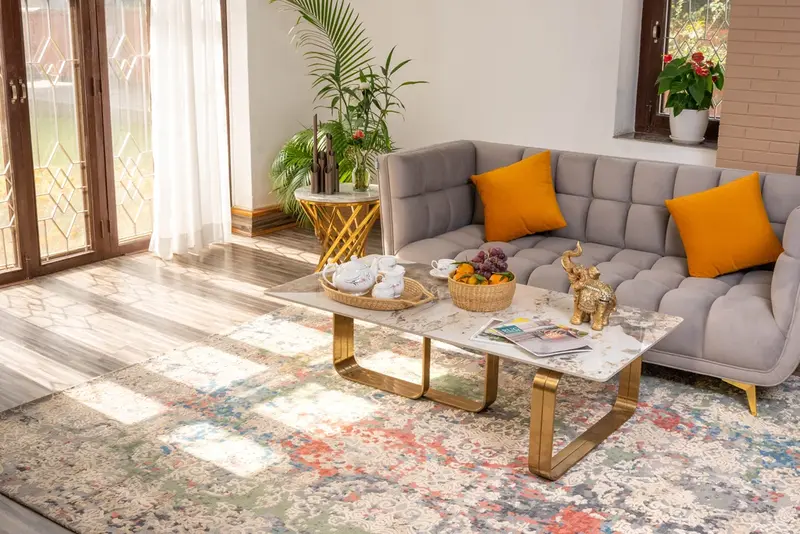
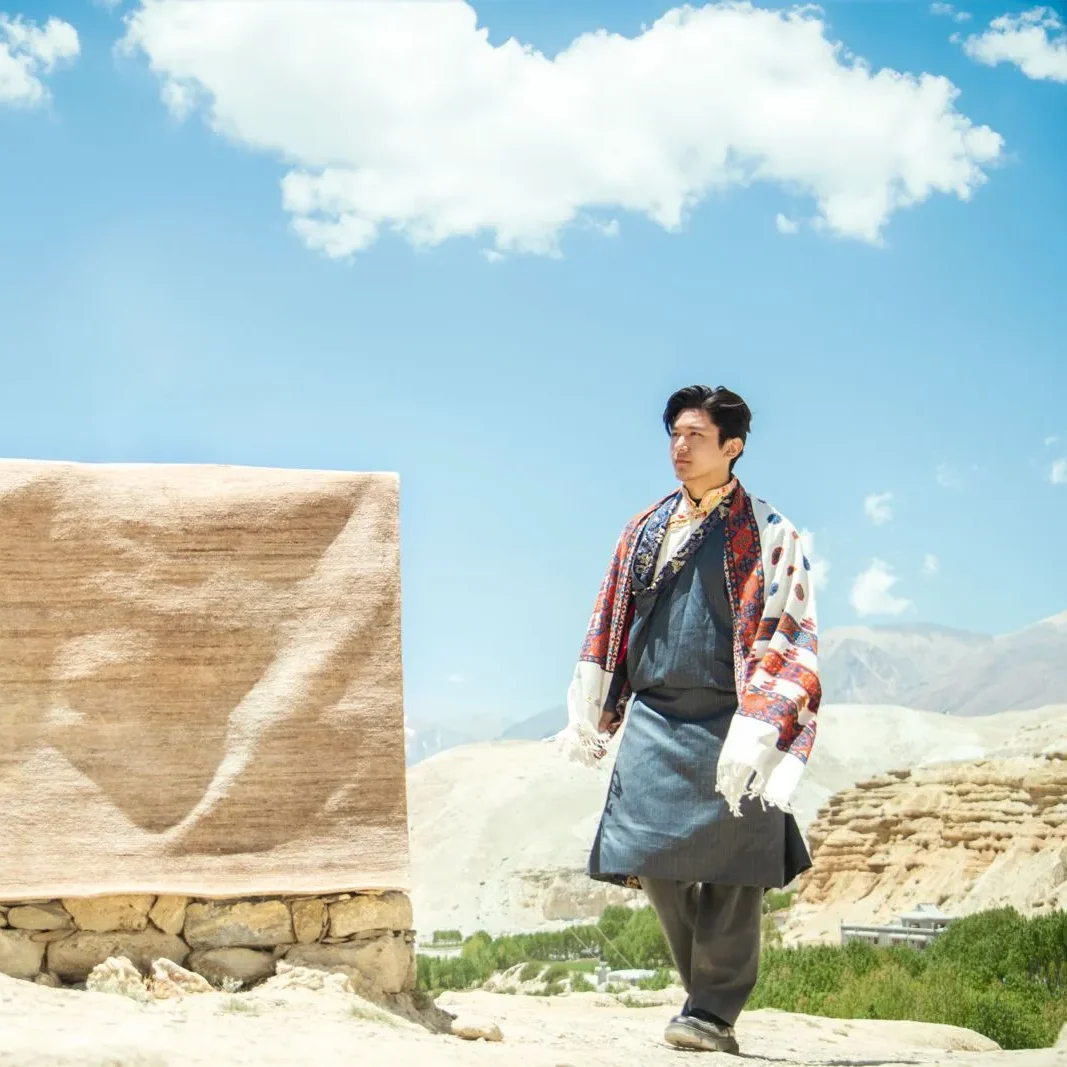
A hand-knotted Tibetan-knot rug from NP Rugs’ Kathmandu workshop
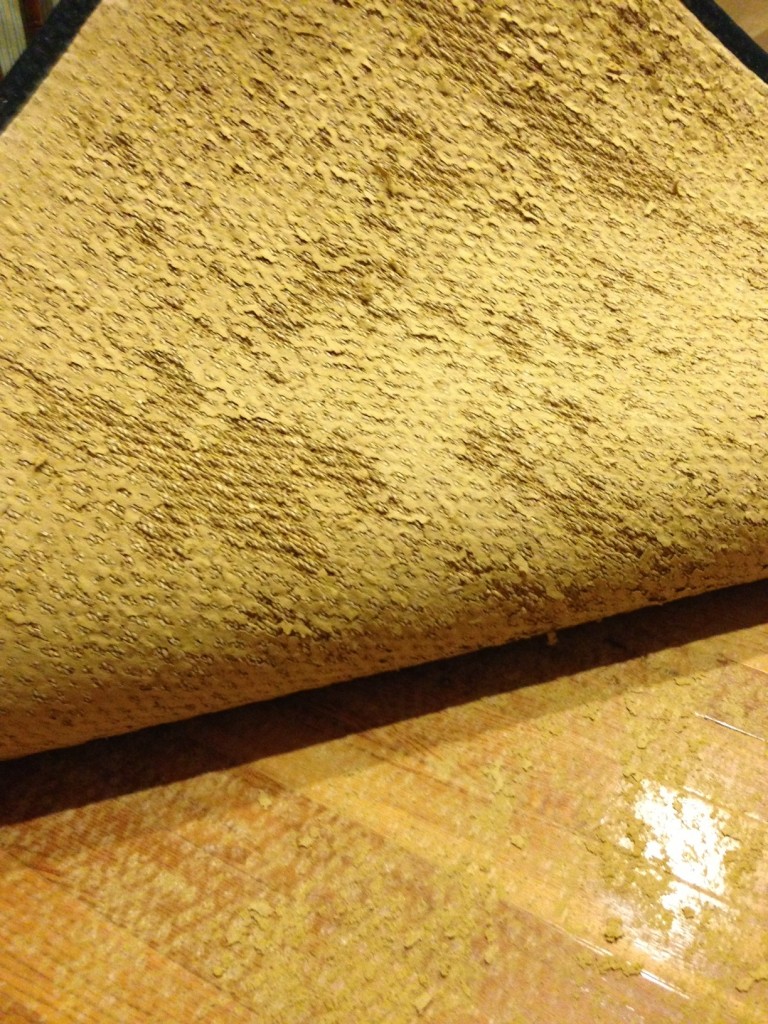
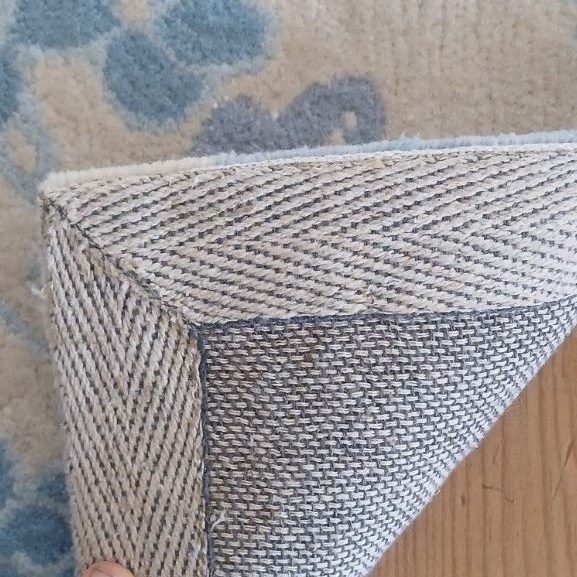
The latex layer on a hand-tufted rug – once this degrades, the rug cannot be repaired
A real order that went wrong – and what it cost
A US boutique home retailer in Austin placed a $40,000 wholesale order for “handmade rugs” in 2019. The spec sheet said, “hand-crafted.” The rugs were hand-tufted. By 2024, three of their largest commercial clients – a hotel lobby, a co-working space, a high-end apartment lobby – had called to ask why the rugs were shedding a fine powder and why the backing was peeling. The retailer ate the replacement cost. The client didn’t reorder from them. That powder is degraded latex. It happens in every hand-tufted rug. The only variable is how soon.
In fact, we hear this story regularly. It’s why we write this down.
Hand knotted vs hand tufted rugs: the construction difference that changes everything
Hand-knotted:
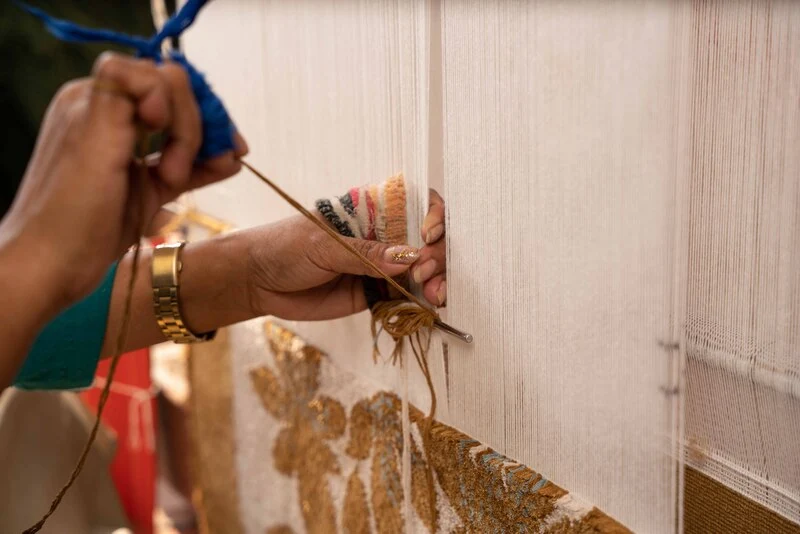
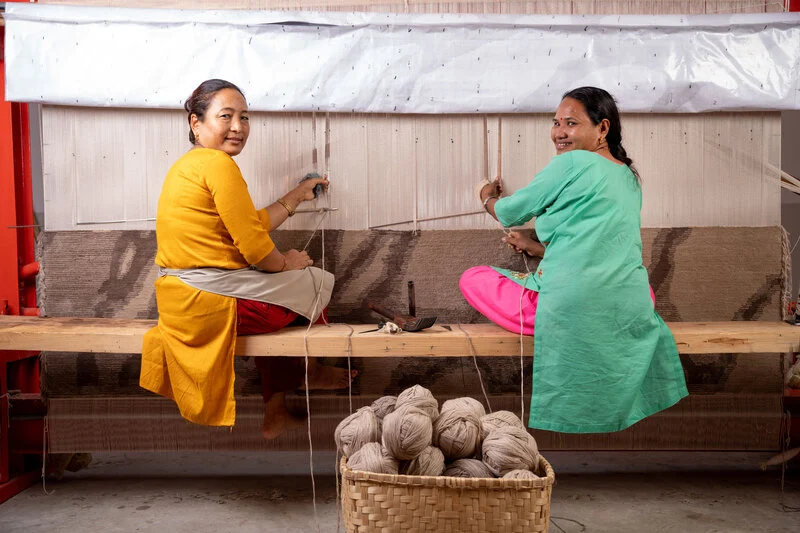
A weaver ties each individual knot around the warp and weft threads of a vertical loom – by hand, one at a time
An 8×10 ft Nepali piece contains anywhere from 60 to 300 knots per sq.in.
Zero adhesive. The rug’s structure is entirely the knot-work itself
Production time: 8 to 12 weeks per piece
Lifespan: 25 to 100 years under normal use; some antique Nepali pieces are still in active circulation
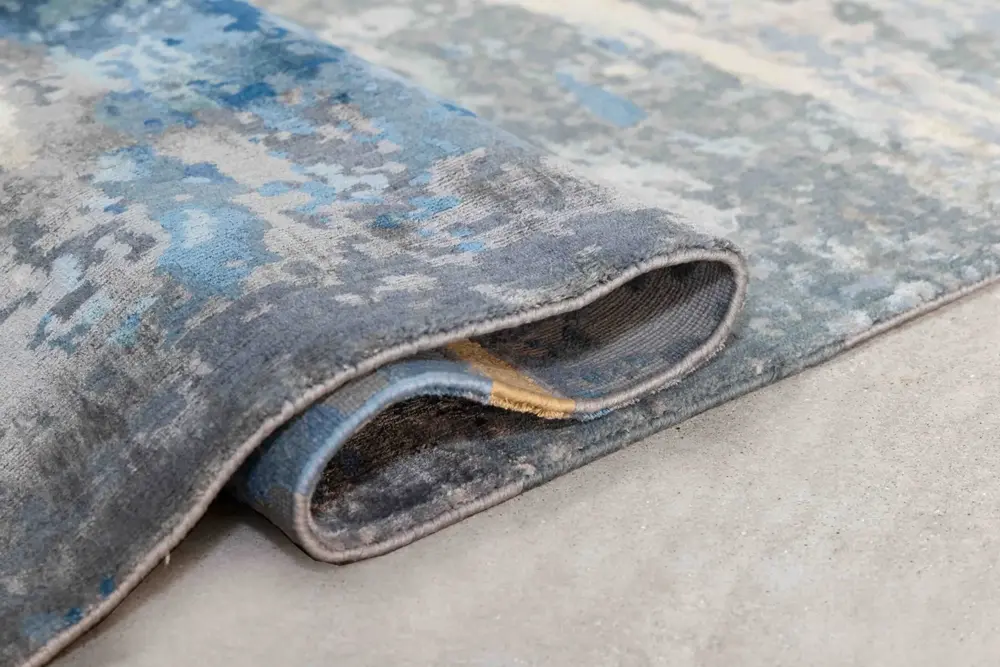
Knotted reverse: every knot tied by hand, no adhesive, no backing
Hand-tufted:
Tufted reverse: cloth panel covers the latex adhesive layer underneath
A worker uses a handheld tufting gun to punch yarn through a per-stenciled canvas frame
Once the pile is in place, the back is coated in latex adhesive and covered with a canvas or cloth backing
Production time: 1 to 3 weeks per piece
Lifespan: 10 to 15 years at NP Rugs’ quality standard – above market average, but still subject to latex degradation
They look almost identical from the front. Flip either one over and the difference is immediate.
What most buyers get wrong about “handmade.”
Both hand-knotted and hand-tufted rugs involve human hands. The tufting gun operator is working by hand. The difference is not effort – it’s structure. A hand-tufted rug is held together by latex adhesive. When that adhesive dries out – and it always does, typically between years 5 and 10 – the rug begins a slow, irreversible structural failure. There is no repair path. You replace it.
A hand-knotted rug gets physically denser under foot traffic. The knots compact. Properly maintained, it performs better at year 20 than it did at year 5. It can be cleaned, repaired, and passed on. These are not the same product category wearing the same label.
The question to ask every supplier: “Is the fringe structural or attached?” On a knotted rug, the fringe is the natural continuation of the loom’s warp threads – it cannot be separated from the rug without unraveling it. On a tufted rug, fringe is sewn or glued on as decoration. If a supplier doesn’t know the answer, that tells you something too.
How to tell them apart – three checks at a trade show or on delivery
Flip it. Hand-knotted: the reverse mirrors the front pattern exactly; individual knots visible; no backing material at all. Hand-tufted: a cloth or canvas panel glued to the reverse to cover the latex layer.
Check the fringe. Knotted: structural, grows from the loom’s warp threads. Tufted: attached afterward, usually with adhesive.
Count the knots. Quality Nepali knotted rugs have 80 to 120 knots per square inch. Hand-tufted rugs have zero knots – the pile is held by adhesive, not structure.
The price comparison that makes sense over time
Hand-tufted (NP Rugs)
Hand-knotted (NP Rugs)
Construction
Tufting gun + latex adhesive
Hand-tied knots, no adhesive
Production time
1–3 weeks
3–6 months
Wholesale price (8×10 ft)
$800–$1,000
$1,600–$2,000
Lifespan
10–15 years
25–30 years (conservative)
Resale value
None
Retains and appreciates
Reversible
No
Yes
High-traffic suitability
Limited
Yes
GoodWeave certified
Yes
Yes
End-client replacement cycle
Every 7–12 years
25+ years
The math for your end clients: $1,800 once, versus $900 three times over 25 years. And the $1,800 piece holds its value if they ever want to sell it. The $900 piece goes to landfill when the backing gives out.
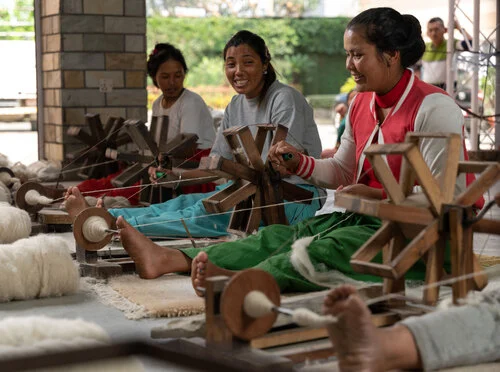
Master weavers at NP Rugs’ Kathmandu workshop – each knot tied individually on a vertical loom
Why Nepal, and why it matters for US buyers right now
Nepal’s carpet industry exports to 60+ countries. According to GoodWeave International, Nepal’s handmade rug sector employs hundreds of thousands of artisans and has reduced child labor in the industry by approximately 75% since 1995.
For US buyers specifically: Nepal benefits from GSP (Generalized System of Preferences) tariff exemptions, which directly lowers your landed cost compared to China- or India-sourced alternatives. As tariff pressure on those two origins has increased since 2018, Nepal’s cost position has strengthened every year.
NP Rugs has been manufacturing in Kathmandu since 1991. We are GoodWeave certified and Label STEP certified – the two certifications US importers increasingly need to satisfy their retailers’ ethical sourcing requirements. We operate an Artisan Village in Sarlahi with 100+ artisans, women-led, working under fair trade standards.
Our hand-tufted rugs carry a 10–15 year lifespan because we use better latex and better construction than most competitors. Our hand-knotted pieces carry a 25–30 year lifespan under normal use. Both figures are conservative. We say conservative because we’d rather a buyer be pleasantly surprised than come back with a claim.
Browse our current wholesale rugs for the US market range, or if you’re building a private label programme, our custom rugs service is a conversation we have with buyers regularly – NO MOQ, custom design available.
Artisans at NP Rugs’ Sarlahi workshop – 100+ women-led, GoodWeave and Label STEP certified. Certificate numbers available on request to wholesale buyers.
FAQ
What’s the minimum order for NP Rugs wholesale?
None. We accept single custom orders as well as large wholesale runs. We ship direct from Kathmandu. Sampling is available before any commitment.
Can you get GoodWeave certification on hand-tufted rugs?
Yes. NP Rugs’ hand-tufted rugs are GoodWeave certified – the certification covers labor conditions, not construction method. Both product types qualify.
How does Nepal’s tariff status compare with India’s and China’s for US imports?
Nepal currently benefits from GSP exemptions in the US. China-origin rugs carry Section 301 tariffs of 7.5–25%. India’s GSP status has been subject to renegotiation. Nepal’s position is the most straightforward for US importers right now.
How long does production take for a custom hand-knotted order?
3 to 6 months depending on size and design complexity. We plan production calendars with wholesale clients to fit buying cycles.
NP Rugs is a GoodWeave and Label STEP certified manufacturer based in Kathmandu, Nepal. We’ve been exporting handmade rugs to the US since 1991. Wholesale enquiries: nprugs.com/contact
A note from NP Rugs leadership
“I built this company on one principle: construction honesty. When I was President of the Nepal Carpet Manufacturers & Exporters Association, the conversation I kept having with importers – in the US, in Germany, across Europe – was about trust. Buyers were being burned by suppliers who called everything ‘handmade’ and meant nothing by it. We decided early that NP Rugs would be the company that could explain exactly what we made and exactly why it lasted. Thirty-five years later, that is still the only marketing we need.”
Tenzing Sherpa , Chairman & Founder, NP Rugs | Former President, Nepal Carpet Manufacturers & Exporters Association (NCMEA)
“What my father built is a standard, not just a business. My job as MD is to make sure every order we ship – whether it’s a single custom piece for a designer in Austin or a full container to a distributor in Hamburg – leaves Kathmandu meeting that standard. The rug in this blog post that shed latex powder on a hotel lobby floor was not ours. That is not an accident. It i`s the result of 35 years of not cutting corners.”
To provide the best experiences, we use technologies like cookies to store and/or access device information. Consenting to these technologies will allow us to process data such as browsing behavior or unique IDs on this site. Not consenting or withdrawing consent, may adversely affect certain features and functions.
Functional
Always active
The technical storage or access is strictly necessary for the legitimate purpose of enabling the use of a specific service explicitly requested by the subscriber or user, or for the sole purpose of carrying out the transmission of a communication over an electronic communications network.
Preferences
The technical storage or access is necessary for the legitimate purpose of storing preferences that are not requested by the subscriber or user.
Statistics
The technical storage or access that is used exclusively for statistical purposes.The technical storage or access that is used exclusively for anonymous statistical purposes. Without a subpoena, voluntary compliance on the part of your Internet Service Provider, or additional records from a third party, information stored or retrieved for this purpose alone cannot usually be used to identify you.
Marketing
The technical storage or access is required to create user profiles to send advertising, or to track the user on a website or across several websites for similar marketing purposes.