
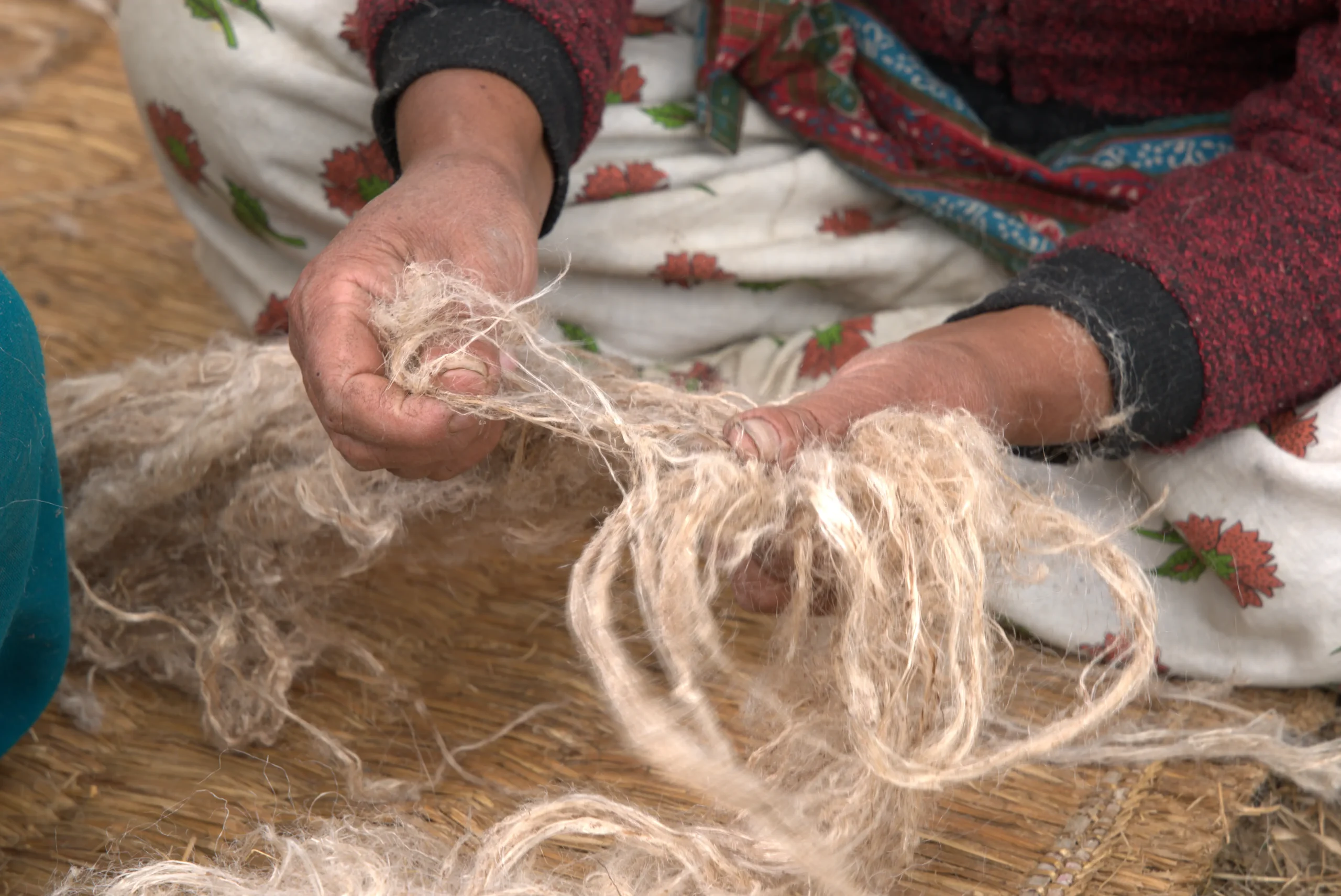
Most rug spec sheets list wool as a single ingredient – as if all wool is interchangeable. It is not.
The difference between Himalayan wool and New Zealand wool is not a marketing distinction. It is a fiber science distinction: different staple length, different lanolin content, different dye uptake, and a different performance profile over decades of use. These differences are directly traceable to altitude.
At NP Rugs, we work with both fibers. We source Himalayan and Tibetan wool for our premium production runs, and New Zealand wool for mid-tier orders where quality is important but the Himalayan premium is not justified by the project brief. In this post, we explain what actually separates them – not to sell you on one over the other, but to give you the information you need to specify correctly.
Why Altitude Changes Wool at the Fiber Level
The altitude effect on wool quality is a well-documented phenomenon in textile science and animal husbandry. Here is the underlying mechanism.
Sheep raised at high altitude – above 3,500 metres in the Himalayan and Tibetan plateau regions – experience sustained cold stress. Their bodies respond to extreme temperature variation by producing longer, denser wool fibers with a higher concentration of lanolin, the natural wax-like oil that coats each strand.
This physiological response has two direct consequences for the fiber:
Longer staple length. Staple length measures the average length of individual wool fibers before spinning. Himalayan wool typically exhibits a staple length of 100–150mm. Standard New Zealand wool sits at 70–100mm. In a hand-knotted rug, longer staple fibers lock more securely into the knot and resist mechanical stress – foot traffic, furniture weight – more effectively over time.
Higher lanolin content. Lanolin is what makes Himalayan wool naturally water-resistant, soil-resistant, and exceptionally dye-receptive. Higher lanolin means dye molecules penetrate more deeply into the fiber’s cortex rather than sitting on the surface. The practical result: colors that are more vibrant at production and that hold that vibrancy more reliably over decades.
New Zealand sheep are raised at sea level or low altitude in a temperate climate. The wool is excellent – globally respected, consistently graded, and widely used in premium rug production worldwide. But the physiological stress that drives those extra microns of fiber length and that richer lanolin loading is simply not present.
A Direct Comparison: The Key Differences
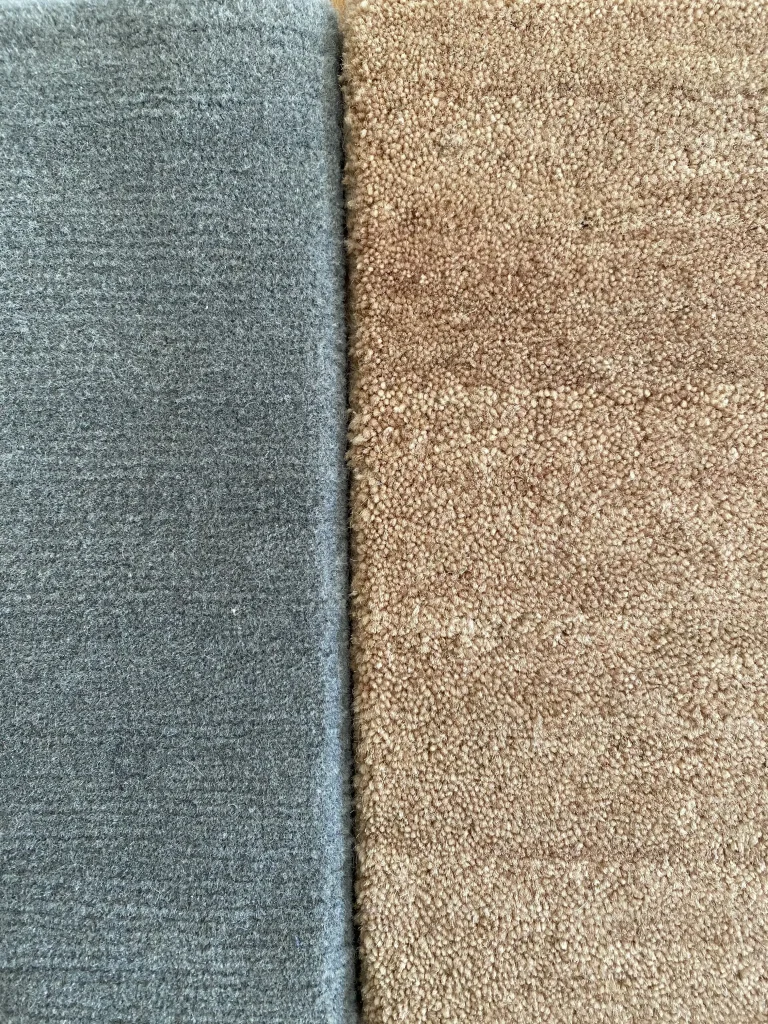
| Property | Himalayan / Tibetan Wool | New Zealand Wool |
|---|---|---|
| Altitude of origin | 3,500–5,000m above sea level | Sea level to 1,000m |
| Staple length | 100–150mm | 70–100mm |
| Lanolin content | High | Moderate |
| Dye uptake | Deep – dye penetrates the cortex | Good – consistent and predictable |
| Color vibrancy | Exceptional — richer under light | Very good |
| Pile resilience | Excellent – recovers well under compression | Good |
| Pilling / shedding | Lower – longer staple locks in knot | Moderate early shedding normal |
| Cost | Higher | Lower |
| Best for | Premium residential, boutique hospitality, heirloom pieces | Mid-tier commercial, programme production, cost-controlled projects |
What This Means for How Your Rug Looks in Year One – and Year Twenty
Both fibers produce a beautiful rug at delivery. The divergence is what happens over time.
In Year 1
The most noticeable difference at delivery is the color. A Himalayan wool rug at the same KPSI and dye specification as a New Zealand wool rug will typically appear richer and more three-dimensional under the same lighting. This is the lanolin-dye interaction: deeper dye penetration produces more complex light refraction in the pile. Buyers who have seen both side by side consistently remark on it.
In Year 5
Wool pile under regular use and correct maintenance will develop a natural patina – a gentle softening of the surface and a settling of the pile. In Himalayan wool, this process tends to enhance the rug’s appearance: the slight sheen that develops as the lanolin migrates to the surface is considered desirable in high-end residential and hospitality contexts. In New Zealand wool, the patina develops differently – cleaner and more consistent, but with less of the luminous quality that makes Himalayan wool distinctive.
In Year 20
A properly maintained Himalayan wool rug is genuinely an heirloom object. The fiber’s natural oil content protects it from brittleness and from the deep soiling that destroys cheaper pile materials. New Zealand wool at twenty years remains a durable, functional rug – but a Himalayan wool piece at the same KPSI and construction quality will outperform it measurably.
The Dye Advantage: Why Himalayan Wool Holds Color Longer
This section is for buyers and designers who care about color accuracy over the lifetime of a rug – which is most serious buyers.
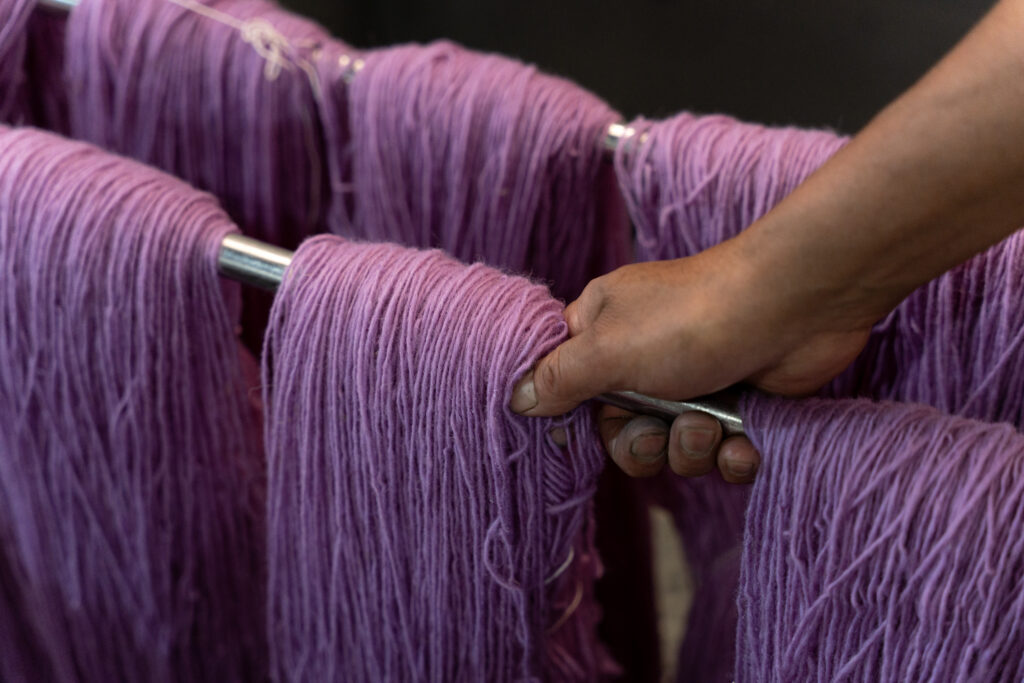
Natural dyes and premium synthetic dyes both interact with lanolin-rich wool differently than with lower-lanolin fibers. The mechanism is straightforward: lanolin molecules in the fiber’s cortex create more binding sites for dye molecules. More binding sites mean deeper penetration. Deeper penetration means the dye physically sits further inside the fiber, protected from the UV radiation and mechanical abrasion that degrade color on the fiber’s outer surface.
The practical consequence: Himalayan wool rugs dyed with the same dye specifications as New Zealand wool rugs will typically exhibit greater color fastness – longer retention of the original dye depth – under standard residential and commercial exposure conditions.
This is measurable. The ISO 105 series of color fastness tests – which measure resistance to light, rubbing, washing, and perspiration – routinely show higher ratings for high-lanolin wools under identical dye conditions.
At NP Rugs, both Himalayan wool and New Zealand wool production uses chrome-free dyes that meet European REACH compliance.
Indian Wool and Silk: Where Do They Fit?
For completeness, here is where the other primary fiber types sit relative to Himalayan and New Zealand wool.
Indian Wool
Indian wool is typically shorter-staple than both Himalayan and New Zealand varieties. It works well for hand-tufted production and lower-KPSI hand-knotted rugs where the design requirements don’t demand the density and resilience of longer-staple fibers. We use it when a client’s specification and budget align – for hand-tufted production specifically, Indian wool is a perfectly sensible choice. For premium hand-knotted work, however, we do not recommend it.
Silk
Silk is not a structural fiber in hand-knotted rugs – it is an accent. We use silk at 15–20% in wool-silk blends to create luminosity in specific design areas, to add contrast between pile textures, and to produce the sheen that certain high-end residential and hospitality briefs require. A 100% silk rug is achievable, but it is fragile by design, commands the highest material cost, and is not practical for most commercial applications. Consequently, when a client asks for silk, our first question is always: for what purpose? The answer determines whether 15% silk in a wool blend is the right call, or whether the full silk specification is genuinely warranted.
Read Also: Understanding hand-knotted vs hand-tufted construction matters as much as the fibre choice – the two decisions are directly connected.
Care Differences by Fiber Type
How you specify care instructions for your clients, and how the rug is maintained over its life, differs meaningfully by fiber.
Himalayan Wool Care
- Vacuuming: Suction-only on the pile – no beater bar attachment. Himalayan wool’s natural lanolin means it repels surface soiling better than lower-lanolin fibers, but mechanical beating loosens the pile structure unnecessarily.
- Spills: Blot immediately with a clean, dry cloth. Himalayan wool’s lanolin provides a natural delay against liquid penetration – act within 5–10 minutes and most liquid spills leave no permanent trace.
- Deep cleaning: Professional wash recommended every 3–5 years. Himalayan wool responds well to traditional wet-washing methods used by specialist rug cleaners. Avoid steam cleaning – the heat damages the lanolin structure.
- Sunlight: Rotate the rug every 6–12 months to ensure even light exposure across the pile. Even high-quality dyes will vary in fade rate if one area receives consistently more UV exposure than another.
New Zealand Wool Care
Care is broadly similar – suction vacuuming, prompt spill response, professional deep cleaning every 3–5 years. The main practical difference is that New Zealand wool may exhibit slightly more early shedding in the first 6–12 months of use. This is normal and self-limiting: it is the release of shorter fibers from the spinning process that did not fully lock into the pile. It is not a defect.
Wool-Silk Blend Care
The silk component requires additional attention. Silk is sensitive to alkaline cleaning agents and to excessive moisture. For wool-silk blends, always use pH-neutral cleaning solutions and ensure the rug dries flat after any liquid exposure. Additionally, silk areas should never be scrubbed – the fiber’s natural luster is damaged by mechanical abrasion.
How to Specify Wool in a Purchase Order
When you submit a brief or request a quote for a custom hand-knotted rug, specify the following:
- Primary fiber: Himalayan/Tibetan wool, New Zealand wool, or wool-silk blend (specify silk percentage)
- Grade preference: We can advise on available grades within each category based on your KPSI specification and intended use
- Dye type: Chrome-free (standard at NP Rugs, required for EU/UK compliance), or natural/vegetable dye (available on request, longer lead time)
- Color fastness documentation: If your client or retailer requires ISO 105 test results, specify this at the quote stage
If you are unsure which fiber is right for your project, we recommend requesting a material sample pack before confirming your specification. We send samples of Himalayan wool, New Zealand wool, and wool-silk blend in the same dye specification so you can compare them under your own lighting conditions.
Frequently Asked Questions
Is Himalayan wool always worth the premium over New Zealand wool?
Not always. For simple geometric designs, entry-KPSI production, or cost-controlled commercial programmes, New Zealand wool delivers excellent results at a lower material cost. The Himalayan premium is worth paying when the design is complex, the KPSI is high (80+), color depth is a priority, or the rug is intended to be a long-term investment piece.
Does NP Rugs source its Himalayan wool directly?
We source from established suppliers in the Himalayan and Tibetan plateau region whose fiber quality we have verified over more than three decades of production. Our wool enters our Kathmandu facility as raw fiber and is processed, dyed, and woven on-campus. We do not use blended or substituted “Himalayan wool” from other regions – the altitude origin is verifiable.
Can I get a sample before committing to a full order?
Yes. We send material sample packs – swatches of Himalayan wool, New Zealand wool, and wool-silk blend at your specified color direction – before production begins. The strike-off sample that precedes full production is also woven in the confirmed fiber, so you can verify both the material and the design before we commit to the full production run.
What is the actual price difference between Himalayan and New Zealand wool?
Material choice accounts for a meaningful share of the total rug cost. The Himalayan premium over New Zealand wool varies with global commodity pricing, but typically adds 15–25% to the raw material cost component of the rug. For the full breakdown of what drives pricing, see our custom hand-knotted rug price guide.
Request Material Samples
The best way to understand the difference between Himalayan and New Zealand wool is to hold both in the same lighting conditions.
We send material sample packs to qualified trade buyers – importers, interior designers, and retail buyers – before any commitment to production. The pack includes swatches of Himalayan wool, New Zealand wool, and a wool-silk blend, dyed to a neutral palette so you can evaluate the fiber quality independently of the color.
If you already have a project in mind, include the color direction and approximate size in your enquiry and we will advise which fiber is most appropriate before sending samples.
NP Rugs is a GoodWeave and Label STEP certified hand-knotted rug manufacturer based in Kathmandu, Nepal. Established 1991. Production capacity: 5,000+ sqm/month. We export to the US, Europe, and Australia. All NP Rugs production uses chrome-free dyes that meet European REACH compliance.