
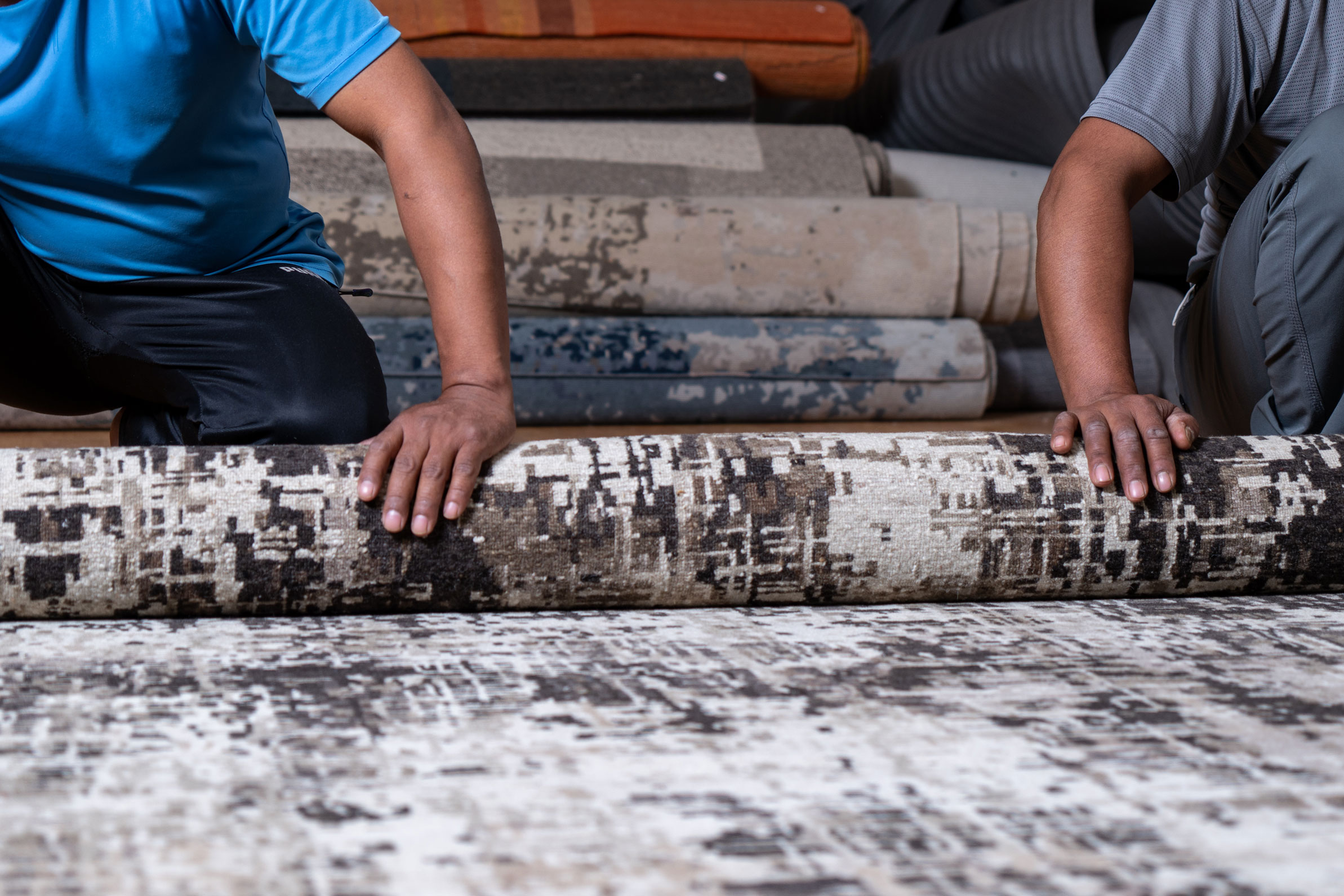
A custom hand-knotted rug is frequently the most expensive single textile in a residential interior. It is also, for most interior designers, the one that requires the most trust in the manufacturer – because unlike a fabric order, you cannot walk into a showroom and pull a cutting. You are commissioning something that does not exist yet, from a facility 7,000 miles away, for a client who is counting on you to get it right.
At NP Rugs, more than 1,000 active trade accounts include interior designers specifying rugs for residential projects across the US, Europe, and Australia. Over thirty-five years, we have seen every version of this process go well and go wrong. What makes it go well is almost always the same thing: a designer who understands what information to provide, when, and in what sequence.
This guide covers exactly that – the full workflow from initial brief to client delivery, including what we need from you, what the timeline actually looks like, and how to present a custom piece to a residential client with confidence.
Why Residential Designers Are the Right Fit for Custom Hand-Knotted Production
Not all interior design projects are suited to a custom hand-knotted rug. It is worth being clear about this upfront.
Hand-knotted rugs from Nepal are well-matched to residential projects where the rug is a focal point: a primary living space, a master bedroom, a private study, a formal dining room, or a high-visibility reception area in a private residence. They are the right choice when color accuracy matters (matching a specific wallcovering or upholstery), when the design needs to be original (no showroom piece fits the space), and when the client understands they are buying something that will outlast most other items in the interior.
What they are not well-matched to: large-scale commercial or hospitality projects that require dozens of identical pieces across multiple locations. That category of order – where consistency across a chain is the primary requirement – typically calls for machine-made production. Knowing this boundary in advance saves everyone time.
For residential projects, however, a custom hand-knotted rug produced in Nepal is one of the few genuinely irreplaceable options available to a designer. No showroom stock piece has the same combination of design freedom, material quality, and production transparency.
What NP Rugs Needs from You: The Design Brief
The brief is where the project either starts clearly or creates problems downstream. Here is everything we need – and what format each element can arrive in.
Dimensions
Exact dimensions in feet and inches, or metric if preferred. If the space has an irregular shape, a floor plan sketch or site measurement drawing is sufficient.
Design Direction
We accept design input in any format. Bring whatever you have:
- CAD or vector files – direct production input, fastest path to a strike-off sample
- Mood board or visual reference – we interpret the aesthetic and palette, then confirm our interpretation with you before weaving
- Pantone color references – used for precise color matching in the dye bath; particularly useful for projects where the rug must match a specific upholstery or paint specification
- Physical samples for color matching – fabric swatches, wallcovering cuttings, stone samples – anything we can match against in our dye process
- Hand sketches – even a rough hand-drawn layout showing field, border, and motif placement is sufficient to begin
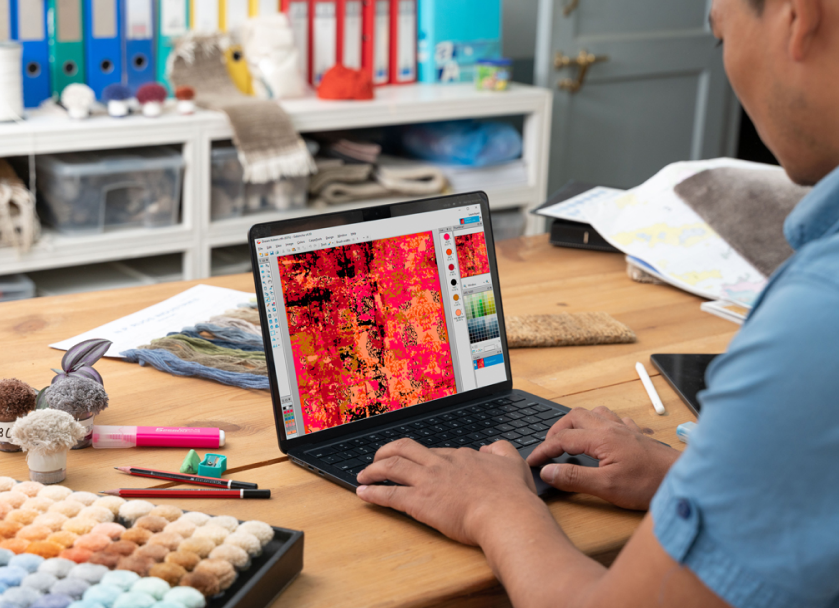
- Nothing at all – if the design has not been finalized, or the client is still undecided, our in-house design team will produce a photorealistic digital rendering of the finished rug at no cost. Bring a brief description of what you’re imagining and we will show you what it looks like before you commit to anything.
Material Specification
Tell us what you want the rug to feel like and how the space is used – we will advise the material. If you have a specific material in mind, confirm:
- Wool type: Himalayan/Tibetan wool (premium – richer color, longer staple), New Zealand wool (excellent mid-tier), or wool-silk blend (for luster and depth in focal pieces)
- Pile height: low pile (formal, contemporary), standard pile, or high pile (softer feel, residential comfort)
- Traffic level: light residential (low traffic zone), moderate residential (family living area), or high-traffic residential (hallways, family rooms with children and pets)
Not sure? Tell us the room type and the client’s lifestyle. We ask these questions every day and can advise.
Knot Density (KPSI)
For most designers, KPSI is not something you need to specify upfront. Submit the design and we will recommend the appropriate range. Over-specifying KPSI on a simple design wastes budget on invisible quality; under-specifying on a complex design produces a result the client will notice. We tell you which is which.
If you want to understand the KPSI decision framework before the brief, see our full guide to knot density (KPSI) explained.
The Strike-Off Sample: What It Is and Why It Matters
The strike-off sample is a small-format woven swatch – typically 30×30cm or 50×50cm – produced in your confirmed specification before full production begins.
It shows you, physically:
- The actual colors as they appear in the dye and the pile (not on a screen or a Pantone card)
- The material feel – how the wool or silk-blend pile sits, the depth of the hand feel
- The design resolution at the specified KPSI – whether fine motifs are rendering cleanly or need a higher knot count
- The pile height – how the finished rug will sit and look in the space
Why this step matters for residential design work: Color in a woven pile behaves differently than color on a swatch card. The way light hits a pile changes the perceived hue. A color that reads as warm grey in your specification may read cooler or warmer once it is in the pile – and the client’s lighting conditions in the finished space will change it again. The strike-off removes this uncertainty before you are committed to a full production run.
Cost: Quoted per project based on size and complexity. For a typical residential commission, this is a meaningful but small figure relative to the total order value. Most trade accounts treat the strike-off as a cost of specification – no different from ordering a fabric cutting for a loose cover, except the stakes are higher.
Timeline: 3–4 weeks from design sign-off to strike-off dispatch. Physical shipping to the US or Europe adds 3–5 days by air.
Production Timelines: What to Tell Your Client
The most common source of tension in a designer-client relationship on a custom rug project is timeline. Here is what the timeline actually looks like, broken into honest stages.
| Stage | Duration |
|---|---|
| Brief to quote | 24 hours |
| Quote to design confirmation | Up to you / your client |
| Design confirmation to strike-off dispatch | 3–4 weeks |
| Strike-off review and approval | Up to you / your client |
| Production (size-dependent – see below) | 7–12 weeks |
| Pre-shipment inspection | 1 week |
| Sea freight to US/Europe | 25–35 days |
| Air freight to US/Europe | 5–7 working days |
Production times from design sign-off at NP Rugs:
| Size | Production Time |
|---|---|
| 5×8 ft | 7–8 weeks |
| 6×9 ft | 8–9 weeks |
| 8×10 ft | 10–11 weeks |
| 9×12 ft | 11–12 weeks |
Total realistic timeline for a US residential project:
From the moment you submit a brief to the rug arriving at a US address:
- Air freight: 18–22 weeks
- Sea freight: 22–28 weeks
The practical message for your clients: a custom hand-knotted rug is a 5–7 month project from start to delivery. This is not a showroom piece on a 2-week lead time. It is a commission – and the timeline is what produces the quality. Set this expectation at the first client meeting, before the rug is specified, and the project runs smoothly. Set it after the brief is approved, and you will manage it.
The Specification That Goes to Production
Once the strike-off is approved and production deposit is received, we lock the following into the production specification sheet:
- Exact dimensions – woven dimensions are confirmed (note: hand-knotted rugs have a natural ±2–3% variation from specified dimensions, consistent with the nature of handmade production)
- KPSI confirmed – the knot density to be maintained across the full piece
- Material – fiber type, grade, and any silk percentage for blends
- Pile height – confirmed from the strike-off sample
- Color references – dye specifications based on approved strike-off, not the original digital reference
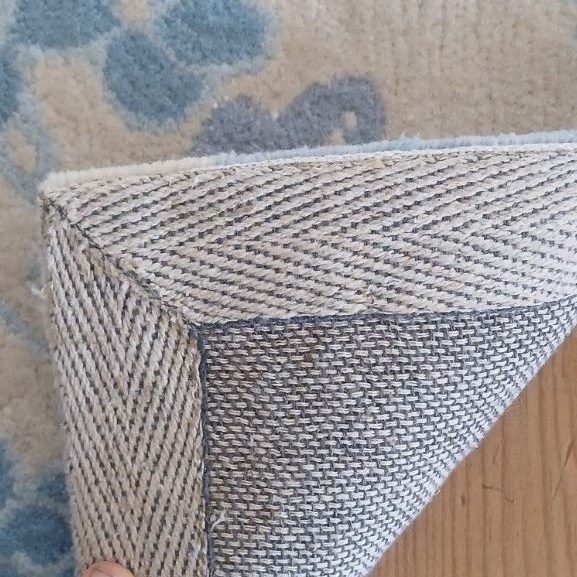
- Finishing – pile cut, fringe or no fringe, binding specification
Nothing changes after this point without your written approval. If the client changes their mind about a color or dimension after production begins, we will advise what is possible – but a mid-production change has cost and timeline implications that need to be confirmed in advance.
Compliance Documentation: What NP Rugs Provides
NP Rugs holds two independent ethical certifications that are relevant to designers working with clients who have sustainability requirements:
GoodWeave Certified
The GoodWeave certification is the internationally recognised standard for ethical rug production. It verifies zero child labour in the supply chain, safe working conditions, legal wages, and annual third-party audits by GoodWeave International. It is required documentation for rugs sold through a number of major US and European retailers, and is increasingly requested by private residential clients who have personal ethical sourcing policies.
Label STEP Certified
Label STEP certification covers fair wages, safe working conditions, and responsible environmental practices across our production chain. It is aligned with ESG sourcing frameworks used by institutional buyers in Europe and the US.
Both certificates are included as standard with every bulk order. For residential clients who want ethical sourcing documentation for their own records – or for designers who specify rugs for clients with sustainability requirements – these certificates are available on request with any order.
A Real Project: How a US Residential Designer Specified a Custom Wool-Silk Rug
A designer working on a high-end residence in the northeastern US came to NP Rugs with a brief for a primary living room rug. The client wanted a piece that would anchor a neutral interior – warm undertones, a traditional medallion pattern, bespoke dimensions to fit an awkward floor plan. Nothing in the US showroom market matched the exact dimension and color requirement.
The brief she submitted:
- Dimensions: 10 ft 6 in × 13 ft 2 in (a non-standard size that no showroom piece covered)
- Design reference: a scanned image of a traditional medallion pattern from a design archive, with a note that the field color needed to shift from the original’s blue-grey to a warm stone
- Material: wool-silk blend for a focal-point living room
- Traffic: light – private adult residence, no children or pets
- Timeline requirement: delivery before a specific move-in date, 7 months from first contact
What happened:
We interpreted the color shift, produced a digital rendering showing the updated palette, and sent it for approval within 72 hours. The designer showed the rendering to the client in the space (projected onto the floor using a simple projector – a technique she used to present rugs before committing). The client requested a slight adjustment to the border width. We revised the rendering. Approval came within a week.
Strike-off was dispatched in four weeks. The designer approved it with one color note – a minor dye adjustment on the field. Second strike-off dispatched two weeks later. Approved.
Production: 13 weeks for a piece of that size (larger than standard 9×12).
The rug was delivered by air, 2 weeks ahead of the client’s move-in date.
What made this project work: the designer had a clear brief, was responsive at each approval stage, and set accurate client expectations from the beginning. The timeline was 6.5 months from first contact to delivery – exactly as projected.
How to Present a Custom Commission to a Residential Client
The design presentation is where many designers either win the client’s confidence or introduce doubt. Here is what works in practice.
Use the digital rendering before you show anything else. Our in-house team produces photorealistic renderings of the finished rug, in your exact dimensions and color direction, before production begins. Present this first. The client can visualise the piece in the room before any money is committed to sampling.
Show the strike-off in the room, not on a table. Place the sample on the floor in the actual installation zone, under the room’s actual lighting. A 50×50cm swatch is large enough to read the color, pile, and texture in context. Clients who see the sample in situ make faster decisions and have fewer regrets.
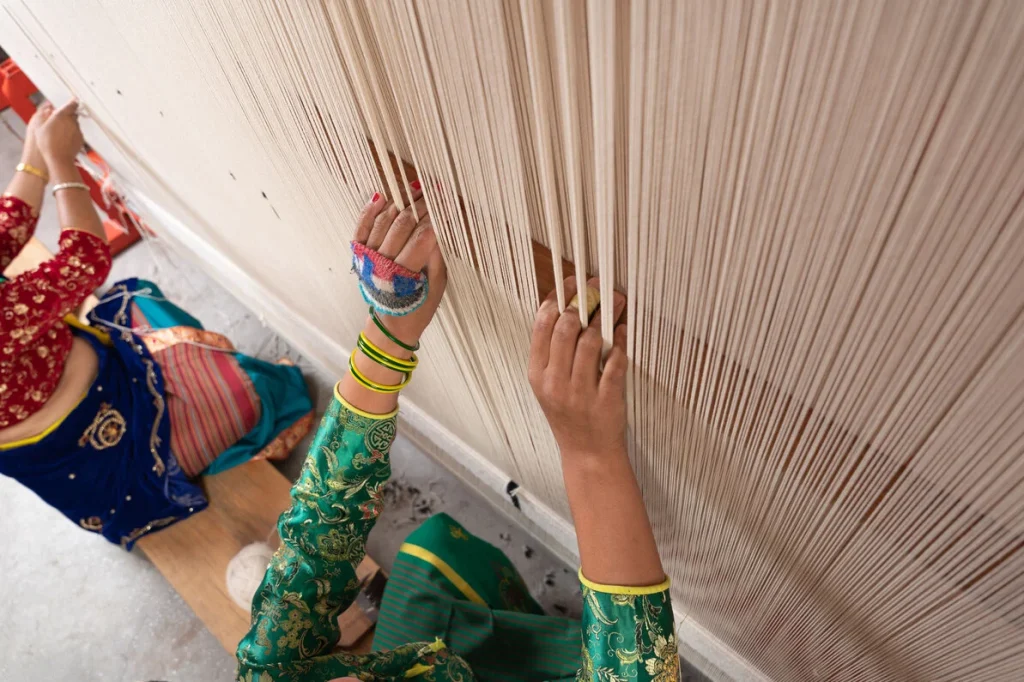
Frame the timeline as a feature, not an apology. A 9×12 ft rug at 80 KPSI contains approximately 1.3 million individual knots, each tied by hand. The production timeline is not a limitation – it is what the quality requires. Clients who understand what they are buying rarely push back on the timeline. Clients who don’t understand it always do.
Provide the compliance documentation at the first meeting. Handing a client the GoodWeave and Label STEP certificates alongside the design proposal signals that you have done your sourcing work properly. For clients who care about ethical provenance – which is an increasing number of high-end residential clients – this closes the sourcing conversation before it opens.
How the NP Rugs Trade Programme Works for Designers
NP Rugs operates as a factory-direct programme. We do not work through showrooms, distributors, or agents. When you open a trade account, you deal directly with our Kathmandu facility.
What trade accounts receive:
- Factory-direct pricing (no distributor or showroom markup – what you pay reflects labor, materials, and export)
- Full customisation across construction, material, knot density, size, color, and pattern
- GoodWeave and Label STEP certified documentation with every bulk order
- A dedicated account manager at our Kathmandu facility throughout every order
- Physical sample dispatch before full production begins
- Pre-shipment inspection carried out on every order before shipping
- Pricing and lead time confirmed and locked in before production begins
There is no minimum order quantity. We work with single-piece residential commissions and multi-piece programmes equally. Opening an account takes one enquiry form and a 24-hour response.
DDP terms are available. For designers who want pricing that includes freight and duties to a US or European address (Delivered Duty Paid), we can quote DDP. This simplifies the client billing – one line, fully landed cost, no customs surprises.
Frequently Asked Questions
Can I use a physical sample I already have for color matching?
Yes. Send us any physical reference – fabric, wallcovering, paint chip, stone sample – and we will match against it in our dye process. Physical samples are more reliable than digital color references because they account for the material’s light reflectance under real conditions.
What happens if the finished rug doesn’t match the approved strike-off?
This does not happen at NP Rugs production – the dye specification is locked from the approved strike-off, not from the original digital reference. If there is a discrepancy between the delivered piece and the approved sample, we investigate and resolve it. This is covered in our production agreement.
Can I split a commission across two separate orders?
Yes. If a project has multiple rooms with separate rugs, each piece can be ordered separately on its own timeline. We recommend specifying all pieces at the same time where color matching across pieces matters – dye lots need to be managed together.
Do designers receive a trade discount from retail?
NP Rugs is factory-direct – there is no retail price to discount from. What trade accounts receive is the direct manufacturing cost: labour, materials, and export. This is significantly lower than what a distributor or showroom would quote for equivalent production quality.
Can I source multiple construction types for the same project?
Yes. NP Rugs produces hand-knotted, hand-tufted, hand-loomed, and hand-woven pieces from the same Kathmandu facility. A project that specifies a hand-knotted focal rug and hand-tufted pieces for secondary spaces can be managed as a single account.
Apply for a Trade Account
Interior designers and architects specifying custom rugs for residential projects can open a trade account directly with our Kathmandu facility. No MOQ. No middleman. No showroom markup.
What you get: factory-direct pricing, full customisation support, free digital rendering of your concept, GoodWeave and Label STEP certified documentation, and a dedicated account manager who responds within 24 hours.
If you have a project in hand, include the dimensions and a brief design direction in your enquiry. We’ll send you a quote and a rendering within 24 hours.
NP Rugs is a GoodWeave and Label STEP certified hand-knotted rug manufacturer based in Kathmandu, Nepal. Established 1991. 1,000+ active trade accounts. Production capacity: 4,000–5,000 sqm/month. DDP and FOB terms available. We ship via DHL, FedEx, UPS, and sea freight.