
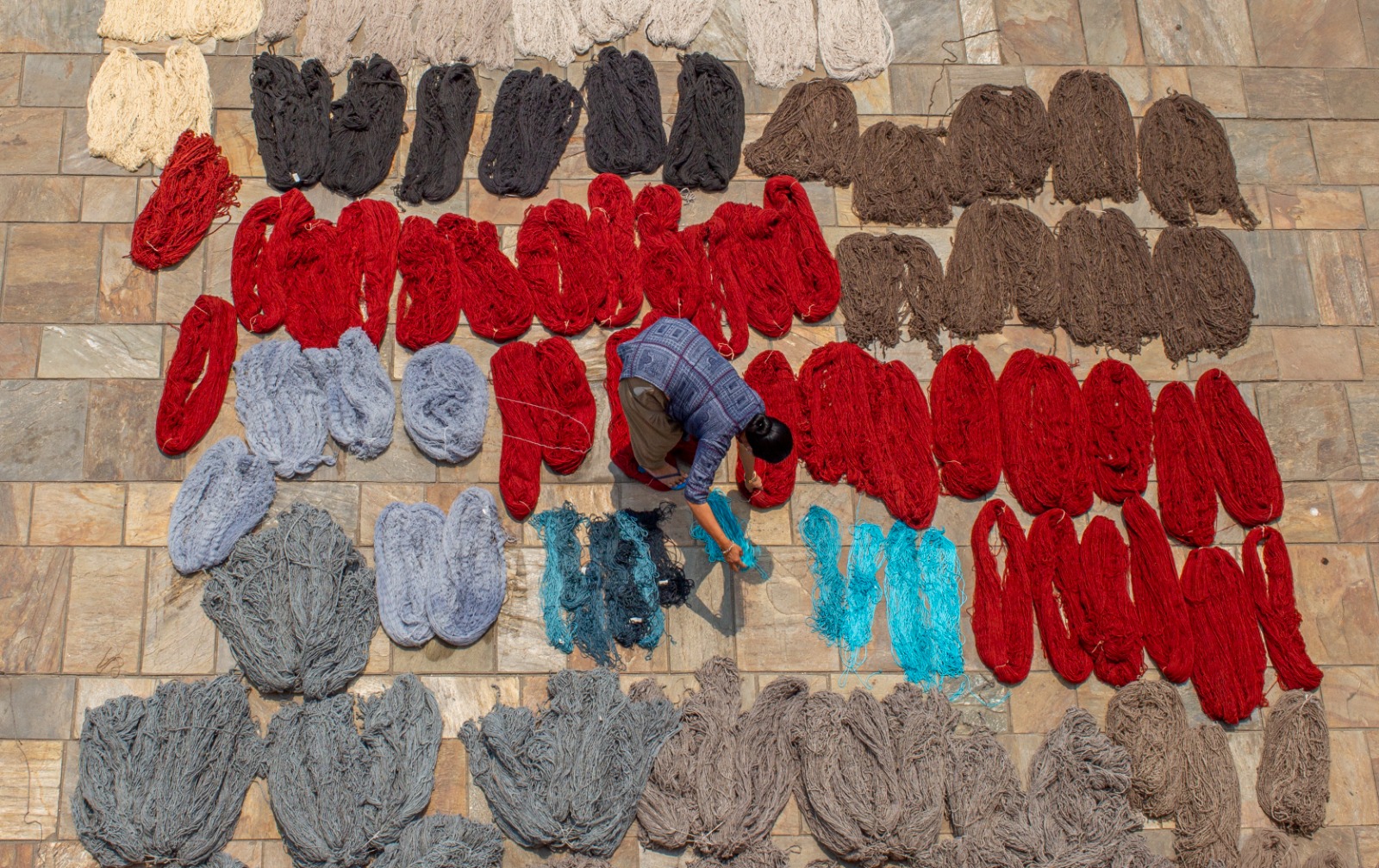
There are antique Tibetan and Nepalese rugs in museum collections and private estates that are over a hundred years old. Their colors have not faded to grey. They have deepened – a quality that collectors call patina and that textile scholars attribute to the combination of high-lanolin wool and plant-based mordant dyeing that was standard practice in Nepal long before synthetic dyes existed.
This is not nostalgia. It is the most reliable indicator we have of how a natural-dyed rug performs over a lifetime of real use.
At NP Rugs, we use chrome-free synthetic dyes as our standard production process – because they are consistent, replicable, and meet the chemical compliance requirements that EU and US retail buyers require. But we also operate a full natural dye programme for clients who request it. And we know the difference between them in the finished rug because we produce both.
This post explains how Nepal’s dyeing tradition works, what plant sources we use, what the real difference between natural and synthetic dye looks like in a rug after twenty years, and how to specify dye type when you order.
Why Nepal Has a Dyeing Tradition Worth Writing About
Nepal’s hand-knotted rug tradition draws directly from the Tibetan plateau dyeing practices that developed over centuries in one of the world’s most material-constrained environments. Dyers working at altitude, with access to specific highland plants and minerals, developed mordanting and dyeing methods that produced colors of exceptional depth and fastness – not because they were pursuing aesthetic perfection, but because they had no alternative. In that environment, the dye had to work. There was no resupply.
The consequence is a tradition that is technically sophisticated, regionally specific, and produces results that genuinely differ from industrial dye processes – both in the character of the color and in how it ages.
This is not the case in most rug-producing countries. Nepal’s proximity to Tibetan dyeing knowledge, combined with access to Himalayan wool fibres whose lanolin content makes them unusually receptive to mordant dyes, creates a combination that is difficult to replicate elsewhere.
The Natural Dye Process: What Actually Happens
Natural dyeing is not simply boiling wool in plant water. The process has several stages, each of which determines whether the final colour will be stable for decades or will fade within years.
1. Mordanting
Before any dye is applied, the wool is treated with a mordant – a metallic salt that bonds to the wool fiber and creates chemical attachment points for the dye molecules. The mordant determines not just color fastness but also the shade itself: the same dye plant with different mordants produces different colors.
Historically, alum (potassium aluminum sulphate) was the standard mordant for most colors. It is safe, produces bright colors, and has excellent fastness. Modern natural dye practice at NP Rugs follows the same principle – we do not use heavy metal mordants like chrome or tin, which were historically common but are now correctly regarded as environmental and health hazards.
2. The Dye Bath
Prepared wool is immersed in a heated dye bath made from the plant or mineral source. The temperature, duration, and pH of the bath are controlled variables. Different fibers absorb dye differently – and this is where Himalayan wool’s high lanolin content becomes significant.
The lanolin molecules in Himalayan wool create additional chemical bonding sites for mordanted dye molecules. This produces deeper dye penetration – the color physically sits further inside the fiber’s cortex, not just on its surface. Surface dye fades. Deep dye develops a patina. The difference between the two is the difference between a rug that looks tired after twenty years and one that looks richer.
3. Fixation and Washing
After dyeing, the wool is washed, dried, and inspected for color uniformity. Any variation at this stage – a slight shift across a dye lot – will appear in the finished rug as abrash: a natural, horizontal color variation that is considered a mark of authenticity in natural-dyed rugs, rather than a defect.
What Plants NP Rugs Uses for Natural Dye Production
The following are the primary plant and mineral sources used in NP Rugs’ natural dye programme. These are the actual materials in use at our Kathmandu facility – not a historical inventory.
| Color | Natural Source |
|---|---|
| Brown | Walnut (Juglans regia) and Safflower (Carthamus tinctorius) |
| Beige | Walnut and Sandalwood (Santalum album) |
| Yellow | Safflower (Carthamus tinctorius) |
| Blue | Indigo flower (Indigofera tinctoria) |
| Black | Heera Kasis (Green Vitriol / Ferrous sulphate) + Jangi Harrow (Black Chebulic / Terminalia chebula) |
| Grey | Heera Kasis + Jangi Harrow (lighter application than black) |
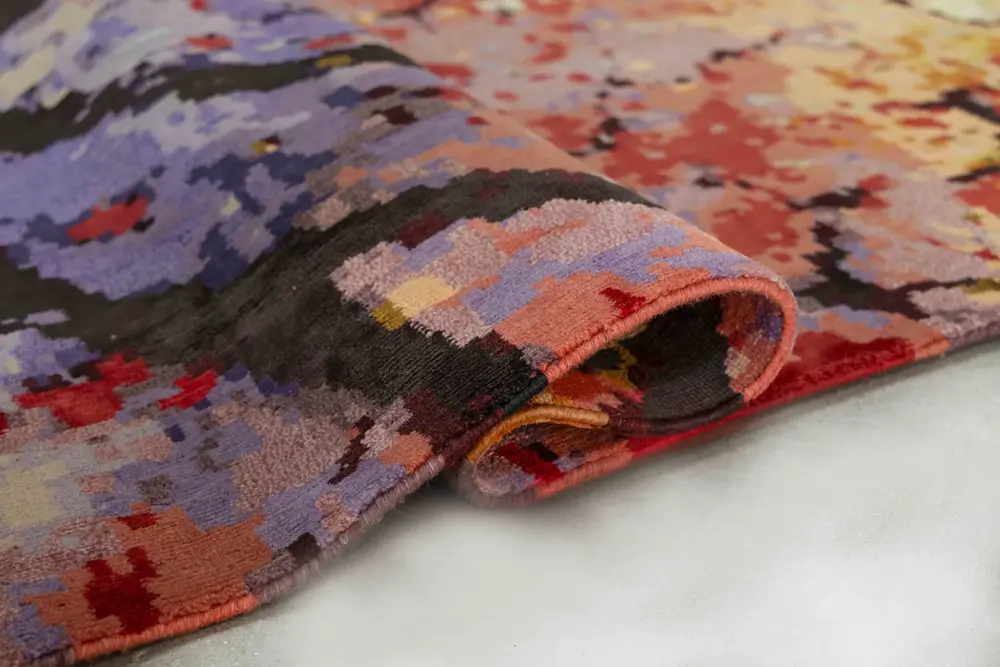
Why these sources specifically:
- Walnut produces the tannin-rich base that gives warm brown tones their depth and fastness – it is among the most stable natural dye sources available
- Safflower is a dual-use plant: the red fraction is water-soluble and fugitive (fades), but the yellow fraction (carthamin) is oil-soluble and substantially more stable – this is the fraction we use
- Indigo is the most lightfast of all natural blue dyes, with a track record measured in millennia across textile traditions worldwide
- Sandalwood contributes warm, resinous beige tones with good fastness characteristics
- Heera Kasis (Green Vitriol / ferrous sulphate) combined with Jangi Harrow (Black Chebulic) produces the iron-tannin reaction that creates deep, stable black and grey – a classic mordant-dye combination found in Tibetan rug traditions
Natural Dyes vs Chrome-Free Synthetic Dyes: The Honest Trade-Off
NP Rugs uses both. Here is what each does – and what to choose when.
Natural Dyes
What they do well:
- Produce colours with a warmth and depth that is difficult to replicate synthetically
- Age to a patina rather than fading – the rug deepens rather than pales over time
- Fully biodegradable – the dye process does not introduce synthetic chemical residues into the waste stream
- Carry the most credible provenance story for clients who value ethical and natural material sourcing
Trade-offs:
- Color replication between orders is not exact – if a client orders a second rug three years later, the color will be close but not identical to the original
- Extended production time – the multi-stage mordanting and dyeing process takes longer than synthetic dyeing
- Abrash (natural color variation across the pile) is a characteristic of natural dyes – for some clients this is desirable, for others it is a problem
- Higher cost – reflected in the quote for natural dye specification orders
Chrome-Free Synthetic Dyes
What they do well:
- Perfect color consistency – every dye lot matches the reference exactly, and future orders match the original precisely
- Shorter production timelines
- Meet European REACH chemical compliance (verified through our GoodWeave and Label STEP audits, which cover our dye houses)
- Significantly lower environmental burden than chrome-based synthetic dyes, which are now banned in most professional rug production contexts
Trade-offs:
- Less natural color warmth – the colors are clean and accurate, but they do not develop the same patina that natural dyes produce over time
- Not biodegradable = synthetic dye chemistry, even when chrome-free, involves industrial compounds
Which to choose:
- For clients who prioritize color accuracy, exact replication, and REACH compliance documentation: chrome-free synthetic – our standard
- For clients who want the fullest expression of Nepal’s dyeing tradition, whose projects have a natural materials brief, or who prioritise patina and long-term colour character over consistency: natural dye programme – available on request
How Dye Type Affects Color Fastness – and What “Decades” Actually Means
The claim that natural-dyed rugs last 50+ years needs to be unpacked honestly.
What the evidence says:
Antique Tibetan and Nepalese rugs dyed with plant-based mordant dyes and woven in high-lanolin Himalayan wool have demonstrably retained their color for a century or more under normal interior conditions. This is documented in museum collection records and auction house provenance notes – not marketing.
What the conditions are:
Long color life in any rug – natural or synthetic – depends on:
- UV exposure – direct, sustained sunlight bleaches any dye over time. Rugs in rooms with south-facing windows need UV-filtering window treatments or rotation
- Cleaning method – harsh chemical spot cleaners and steam cleaning degrade dye bonds. Professional hand-washing, every 3–5 years, is the correct maintenance
- Wool quality – high-lanolin Himalayan wool holds dye more deeply than lower-lanolin alternatives. The fiber is part of the equation, not just the dye
- Mordant quality – rugs where the mordanting was done correctly will outlast rugs where it was hurried or substituted
What “decades” means at NP Rugs:
We cannot independently certify color life – we do not run formal ISO 105 color fastness tests on every production run. What we do guarantee is that our dye process – both natural and synthetic – is conducted at our GoodWeave and Label STEP audited facility, using materials and methods that our auditors review annually. Our dye houses are part of the certified supply chain – not a black box.
The practical statement we make to trade buyers: a correctly specified and maintained rug from NP Rugs should hold its color substantially for the lifetime of the project it was ordered for. For a residential interior, that means decades.
How Colour Develops Over Time: Patina vs Fading
This is a distinction that matters enormously for how you present a natural-dyed rug to a client.
Fading is surface dye degrading – the color loses saturation and becomes washed-out. This is what happens when dye penetration was shallow, mordanting was inadequate, or the wool quality was poor. It looks like the rug is dying.
Patina is deep dye settling – the color becomes slightly softer in the highlights, develops a dimensional quality under raking light, and acquires what collectors describe as “warmth.” The rug looks like it has been lived with, rather than damaged. Antique rugs command premium prices precisely because this patina took decades to develop.
Natural dyes in correctly mordanted, high-lanolin wool produce patina rather than fading. Chrome-free synthetic dyes, when correctly applied, produce more stable but also more static color – they maintain closer to their original saturation over time rather than developing the same dimensional quality.
Neither is objectively superior. They are different. The choice depends on the client’s expectations and the design brief.
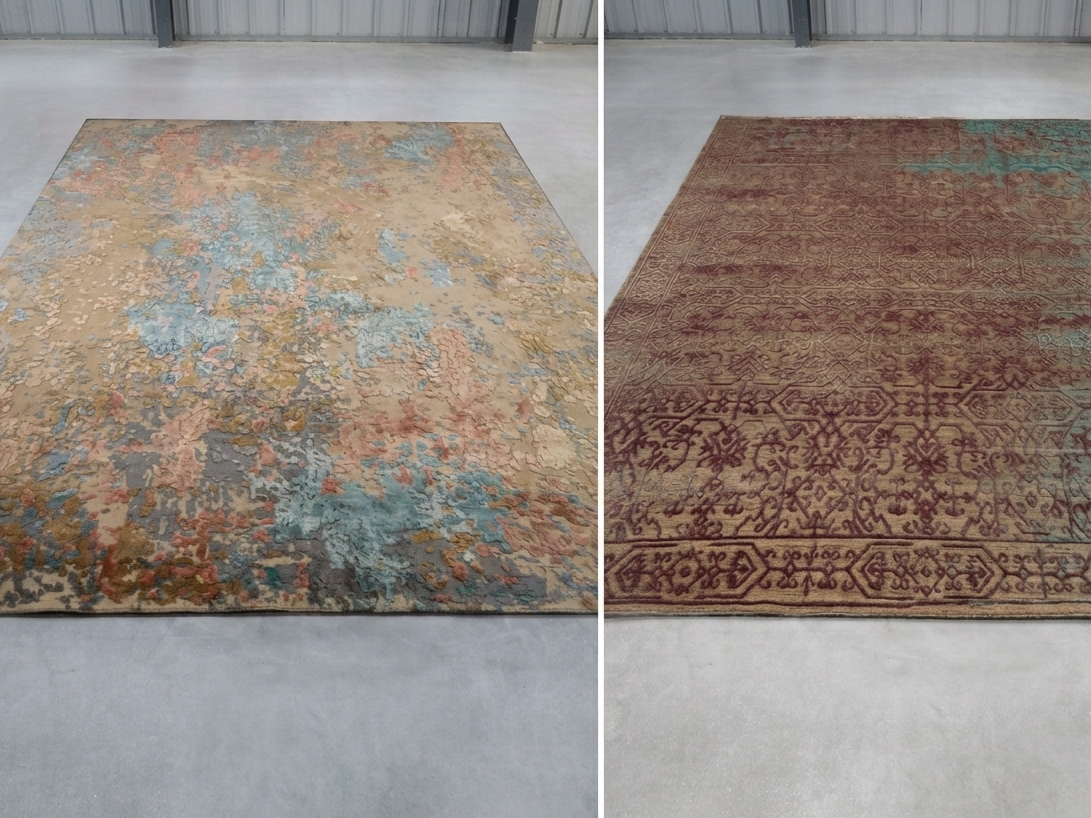
How to Specify Dye Type When Ordering
When you place a custom rug order with NP Rugs, dye type is a specification choice – like material or pile height.
Standard: Chrome-free synthetic dyes. REACH-compliant. Covered by GoodWeave and Label STEP audit. Consistent colour replication between orders.
On request: Natural dye programme. Plant-based and mineral sources as listed above. Longer production timeline. Quote provided per project.
What to include in your brief if specifying natural dyes:
- Colour direction (we will advise which natural sources are appropriate for the palette)
- Tolerance for abrash (natural color variation) – yes or no
- Whether REACH documentation is required (chrome-free synthetic dyes meet REACH; natural dyes are inherently non-synthetic and do not require REACH registration)
What to include if specifying chrome-free synthetic:
- Pantone reference, physical sample for colour matching, or digital colour reference
- Whether you require REACH compliance documentation for the order (available as standard)
Frequently Asked Questions
Is a hand-knotted rug worth it?
Yes – for buyers who understand what they are buying. A well-specified hand-knotted rug, made in quality material with properly applied dye, will outlast virtually any machine-made or hand-tufted alternative. The combination of hand-tied construction, high-lanolin Himalayan wool, and deeply penetrating dye produces a rug that improves with age rather than deteriorating. For buyers who want a one-time purchase that lasts decades, hand-knotted is the only construction category that reliably delivers that.
How to identify a hand-knotted rug?
Turn it over. A hand-knotted rug shows the knot tufts on the reverse – the pattern on the back is a slightly blurred mirror of the front, created by the individual knots tied around the warp threads. Machine-made rugs have a uniform, fabric-like backing with no visible knot structure. Hand-tufted rugs have a latex or canvas backing applied after tufting, which covers the reverse entirely. If you can see the pattern on the back through individual knots – it is hand-knotted.
Do natural dyes cost more?
Yes. The multi-stage mordanting and plant sourcing process is more labour-intensive than synthetic dyeing. Natural dye specification orders are quoted per project. For most residential commissions, the additional cost is a meaningful but not prohibitive addition to the total order value.
Can I get both natural and synthetic dyes in the same rug?
Not recommended. The two dye types react differently to light, cleaning, and wear. Mixing them in the same piece introduces an unpredictable differential in how the colors age – some areas will develop patina while others remain static. We recommend a single dye type for the full rug.
Which country is famous for hand-knotted carpet?
Nepal, Iran, Turkey, India, and Afghanistan are the primary hand-knotted rug producing countries. Nepal is specifically known for its Tibetan knotting tradition, high-altitude Himalayan wool, and the capacity to produce very high KPSI rugs (up to 300 KPSI at NP Rugs). Nepal is also one of the few origins with internationally recognized ethical certifications – GoodWeave and Label STEP – that are independently audited and cover the full supply chain, including dye houses.
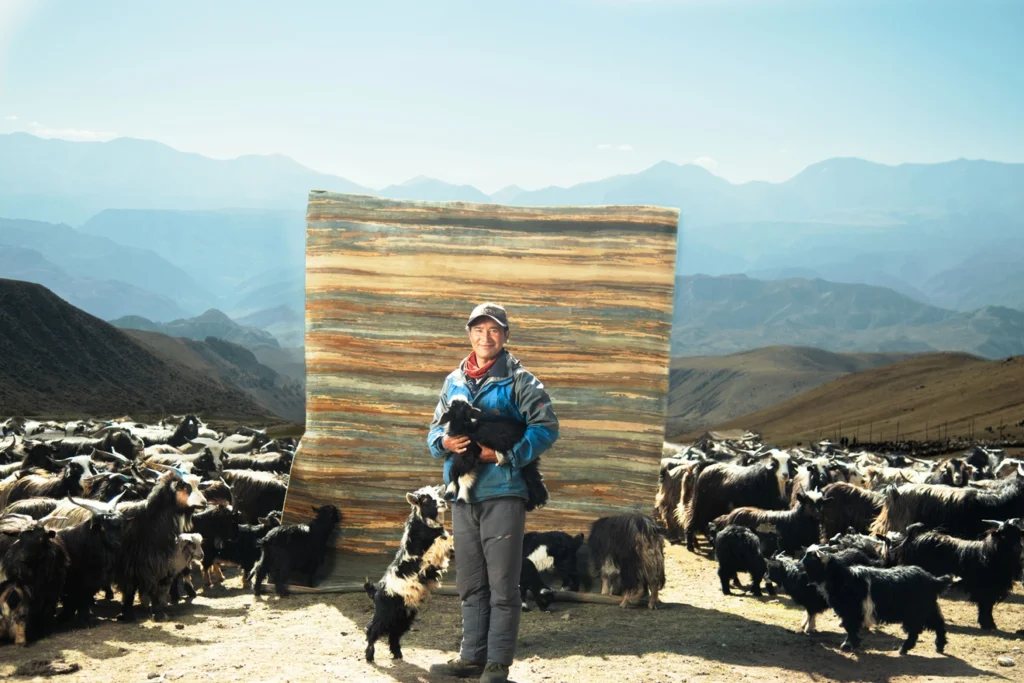
Request Dye Specification Documentation
For trade buyers who need documentation on NP Rugs’ dye process – REACH compliance, GoodWeave and Label STEP audit coverage of our dye houses, or a natural dye specification quote – we provide this as part of every trade account enquiry.
If you have a project that requires natural dyes or specific chemical compliance documentation, include this in your brief and we will address it directly in the quote.
NP Rugs is a GoodWeave and Label STEP certified hand-knotted rug manufacturer based in Kathmandu, Nepal. Established 1991. Chrome-free synthetic dyes are used as standard; natural dye programme available on request. Dye houses are covered by annual GoodWeave and Label STEP audits. We export to the US, Europe, and Australia.